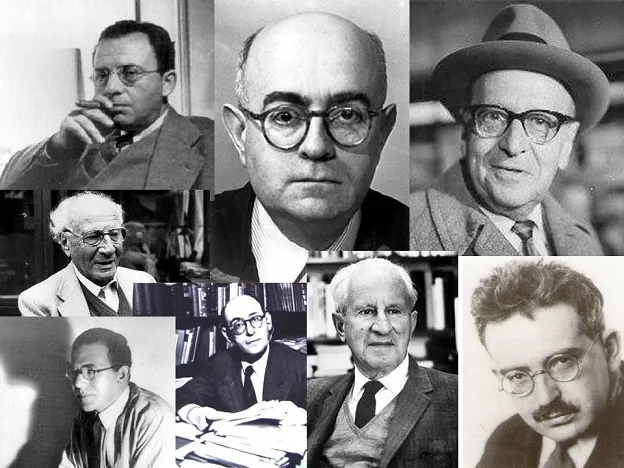
“Wokeness” is not new; it is simply the most modern iteration of an identity-oriented, social-justice-minded politics that took off in the U.S. in the mid-1960s.
The vanguards of American wokeness were the “New Left,” a notably cerebral, theory-reading contingent of the ‘60s and ‘70s counterculture. As the counterculture waned, many individuals from, or adjacent to, the New Left settled down and joined the faculty at major American universities. As a result, their unique ideas and frameworks seeped into academia, particularly humanities and social sciences departments.
What made the ideas of the New Left unique was that they were largely detached from the liberal philosophical tradition of John Locke, Voltaire, and Adam Smith — a school of thought deeply intertwined with the European Enlightenment movement. For these thinkers, principles like freedom of expression and freedom from state overreach were paramount. So too were institutions like private property, free markets, secular governments, free and fair elections, and due process.
Not all of these thinkers espoused each of these principles, though together they largely constitute the liberal milieu. The throughline is a general belief in reason over dogma, political equality, and the preservation of liberties through limiting state overreach. This is why many governments considered liberal today employ some form of constitutional democracy.
Despite what many consider admirable principles, liberalism has nonetheless drawn many critics. A good candidate for the most (in)famous of its critics was Karl Marx.
Though Marx did not use the following verbiage himself, his main gripe with liberalism lay in its prioritizing of negative freedoms over positive freedoms. Negative freedoms can be thought of as freedoms from a particular state action — like censorship of speech, confiscation of property, and state violence (without a trial and due process). Positive freedoms, on the other hand, can be thought of as “freedoms to” — like the freedom to have a certain standard of living, to actualize one’s desires, and to work or not work.
To illustrate the practical implications of this difference, it helps to contrast two hypothetical societies. Society One has compulsory taxation but provides free healthcare, education, and water for all needy citizens. Society Two has no compulsory taxation, but many citizens are barely able to meet their basic needs. Marx would argue that Society One ensures greater freedom. This is because there are more people in Society One capable of realizing their desires, rendering them freer in the aggregate, despite one instance of compulsory action (taxation). Despite not being taxed, many in Society Two must devote almost all of their focus and energy to mere survival, restricting their net amount of life possibilities. Such people, according to Marx, are far more constrained, not by the state, but by their economic realities.
In advocating for greater freedom, Marx argued that many other tenets of liberalism, such as democracy, private property, and free markets, ought to be cast aside. Despite this, he held onto principles such as secularism, science, and the use of reason. Marxist thought went through many changes after his death, particularly following World War II.
One of the most influential strands of Marxist thought to emerge following the war was “Critical Theory.” Though the term was coined by social theorist Max Horkheimer in 1937, the movement truly gained steam following the release of “Dialectic of Enlightenment” in 1947 by Horkheimer and fellow Frankfurt School associate Theodor Adorno.
In that book, they attempt to draw a throughline from the European Enlightenment to the rise of Nazism. To them, Enlightenment thought instilled in many an undue faith in reason and, as a result, perpetuated the forces it initially sought to stamp out: superstition, domination, and fear of the unknown. A key component of this process was the growing reliance of many institutions on instrumental reason.
Instrumental reason occurs for the purpose of lending undue credibility to oneself by leveraging the strength of certain types of arguments (often formal and quantitative ones) where they do not belong. This often allowed the aforementioned institutions to render seemingly unambiguous conclusions. As a result, however, they often stopped asking the most important questions: those which could not be answered by reason alone. A real-life example would be asking: How can we increase GDP? rather than, Does increasing GDP promote human flourishing? Essentially, in directing labor and inquiry toward efficiency and rational distillation, the complexities of human desire and experience became flattened and marginalized.
Problems With the Frankfurt School
This vibey cultural critique captured the hearts and minds of many counterculturalists who opposed both Western capitalism and the authoritarian USSR. From this diagnosis came a new leftism centered on social and cultural critique, which saw students and intellectuals — rather than the proletariat — as the new vanguards of the revolution. Figures such as Herbert Marcuse of the Frankfurt School, dubbed the “Guru of the New Left,” and the critical theory movement they spawned had a profound impact on the Western left and, by extension, much of Western academia in the years and decades to come.
Out of this milieu arose structuralism, post-structuralism, postmodernism, postcolonialism, feminist theory, queer theory, cultural studies, etc. Despite the daunting list of fields, all of these movements are united in utilizing Frankfurt School-style rationality skepticism to analyze different domains of power within society. The consequence has been a heavy focus on topics such as identity, subjectivity, relativism, deconstruction, and lived experience. For many of these theorists, concepts such as objective morality or even objective truth were at best suspect and, at worst, tools of subjugation. Paradoxically, however, their work is often deeply normative, asserting moral imperatives such as liberation, revolution, and radical equality. What I will hereafter call “wokeness” refers to the collection of ideas that originated within, but have largely flowed out of, critical theory-influenced academia, which typically takes the form of normative arguments regarding the proper engagement with and treatment of oppressed groups within society.
Wokeness as Botched Moral Theory
How exactly can morality be relative yet also important enough to be the driving force of one’s work? One possible way to reconcile this tension — the one often chosen by these theorists — is a simple appeal to empathy as the source of moral obligation. Recognizing states such as suffering prompt moral impulses within us; thus, these impulses are more or less sufficient as guides to moral action.
This is a fine starting point, but it quickly causes issues when we try to devise a moral procedure from it. Intuitive morality can only get us so far, and it is quite prone to bias and favoritism — two tendencies that ought to be resisted by supposed egalitarians. In addition, simple moral intuition does not suffice for a political system, especially one that attempts to resist authoritarianism and corruption. Sometimes laws are passed that we do not agree with, but most of us would rather be beholden to a system of laws devised by elected officials than the moral intuitions of a single person.
This is a classic tension in political philosophy: How to devise a system of laws that can change as society’s moral intuitions or sensibilities change, but that also remains fixed enough to protect both people’s rights and the integrity of the system itself. Despite a long history of exploration, for many on the New Left and the fields that grew out of it, discussions such as this were quite taboo. For these theorists, they reeked of the grand narratives and overreaching rationality that (according to them) were responsible for so many of the world’s ills.
Despite extensive pushback, not all had given up on the pursuit of fundamental, rationally constructed ethical and political theory. In fact, arguably the most important work of 20th-century political philosophy, John Rawls’ “A Theory of Justice,” was released just following the peak of the counterculture in 1971. While its specific prescriptions are invaluable, it is rather one of its methods, that of reflective equilibrium (RE), which will be most useful in distinguishing serious ethical philosophy from the unserious, critical theory-derived strain.
RE is a process by which people can construct a more publicly defensible, decisive, and bias-minimizing system of moral judgments. It begins with our moral intuitions in specific cases; from these, we generate a set of principles to justify these intuitions. Following this, we engage in a new sort of reflection, whereby we examine the principles we devised, extend and apply them to practical cases (both real and hypothetical), and observe where either the principles themselves generate contradictory prescriptions or where those prescriptions conflict with our case-specific moral intuition(s). From this process, we may find that our prior principles were hastily conceived or that our intuitions may have arisen from bias. If we reach equilibrium, this means we have — for the moral cases we have dwelled upon — successfully parsed out moral considerations from non-moral ones and built a system whereby we know how and when to prioritize certain principles over others.
Wokeness Case Studies
Applying RE to moral judgments and opinions often deemed “woke” will help shed light on why the position is so unstable. The first example I will explore is the bizarre response of certain segments of the left to the 2015 Charlie Hebdo attacks. Though the term “woke” was seldom used at the time, many of its tendencies were on full display here.
To get an idea of what exactly was being said, we can look to the infamous political scientist Norman Finkelstein, who expressed having “no sympathy for [the staff of Charlie Hebdo]” and likened the left-wing magazine to the Nazi outlet Der Stürmer. On the lesser end, Tony Barber of the Financial Times said after the incident: “Some common sense would be useful at publications such as Charlie Hebdo … which purport to strike a blow for freedom when they provoke Muslims, but are actually just being stupid.”
Lastly, there is cartoonist Garry Trudeau, who stated that “[just] because one has the right to offend a group does not mean that one must. Or that that group gives up the right to be outraged. They’re allowed to feel pain. Freedom should always be discussed within the context of responsibility.”
Just being stupid? Responsibility? Are we being serious? Yes, people can and often should be held responsible for what they say, and repercussions can range from condemnation, censure, and even firing. However, absolutely nobody killed for speech is responsible for their fate.
The principles we devise through RE (such as freedom of expression) are deep encodings of the sentiments that underlie our common judgments. To do away with them when speech makes us uncomfortable undermines the foundation of all those past judgments.
Much of the woke crowd seems to think cases such as Charlie Hebdo require us to consider contextual factors that can overpower freedom of speech, without actually understanding its essential purpose. When we make exceptions for a specific instance of speech, we allow people who oppose our view to make similarly arbitrary distinctions once they achieve power. This is far more dangerous than simply allowing offensive speech to exist.
RE calls on us to think as broadly as possible about the implications of our beliefs and actions. Offensive cartoons may rightfully offend our moral sensibilities; however, even if one believed people should be prosecuted for offensive speech in an ideal world, a rigorous application of RE would certainly not induce a reaction such as the ones above. It would make us recognize, at the very least, the danger inherent in an arbitrary abandonment of liberal principles.
Another less famous but philosophically revealing tension point between woke moral theory and good moral theory is the former’s response to the effective altruism (EA) movement. To understand what is being critiqued, the core of EA can be said to rest on the following four premises:
- Some states of affairs are morally better than others.
- Some actions are more likely to lead to better states of affairs than others.
- We should, to the extent that we can, seek to bring about morally better states of affairs.
- We should use the best available evidence and reasoning to determine which states of affairs are better and which actions are most likely to bring them about.
The underlying approach, along with the conduct of some proponents of EA, has many justifiable critiques. Typical objections from the woke crowd, however, specifically from the critical theory-derived strains of academia mentioned earlier, have been quite bad. Take, for example, the book “The Good It Promises, the Harm It Does,” wherein a collection of critical-theory-influenced academics, activists, and nonprofit founders target EA’s animal welfare approaches. Despite a rather narrow focus, the arguments presented extend far beyond that domain.
Philosopher Richard Chappell addresses many of them in this blog post. Here are some examples of said “arguments”:
- “Normative Whiteness is cooked into the ideological foundation, because it focuses on maximizing the effectiveness of donors’ resources.” (p. 28)
- “[A flaw of EA is that it is not sufficiently committed to] starting with the voices of the oppressed and taking simultaneously empathetic and critical engagement with these voices to guide the development of strategies for responding to suffering.” (p. xxvii)
- “Is it truly okay to ignore the mind-numbing suffering of those we could save in order to [save more via indirect means]?” (p. 196)
The first argument is just downright silly. It appears to be implying that normative nonwhiteness entails inefficiently allocating donors’ resources. It seems, dare I say, rather racist to argue that seeking to do the most possible good with a given amount is an inherently white concept. What should be the alternative? Throwing money at whichever causes are aesthetically appealing? Is that how nonwhite people think?
Maybe the key to a charitable reading of argument one lies in argument two. Perhaps donors’ resources should primarily be spent on strategies that begin with, and are guided by, the voices of the oppressed. This appeal to the voices of the oppressed is incredibly common among woke theorists. Though the advice is prudent in certain cases, it is quite problematic in many others.
The first issue lies in determining who among the oppressed compose its voices and how to reconcile the inevitable non-unanimity of belief. It seems similarly inevitable that anyone who attempts to actually apply this principle would be immediately torn to shreds by their former ideological comrades for things such as silencing dissenting voices or imposing normatively Western concepts such as trade-offs and majority rules.
The second main reason to reject this approach is that the voices of the oppressed can actually be wrong. Is this the case most of the time? Probably not, but the possibility should not be dismissed out of hand. Imagine, for example, a hypothetical group of German Jews who thought Hitler’s rise to power would prompt a stronger fight against antisemitism and thus supported his rise. Would it be wrong to try to change their minds? Does their being oppressed automatically make them perfect judges of their realities? Would they, in retrospect, have preferred that we stay silent so as to respect their voices? The answer to all three of these is obviously no.
Argument three, as pointed out by Chappell, is simply an appeal to emotion through identifiable victim bias. A great deal of suffering exists in this world — some right in front of our faces, some an ocean away — but the latter ought to carry equal moral salience. If suffering is far worse an ocean away, we are obligated to address it first, no matter how biased we may be toward those close to us. Nobody in the EA movement advocates ignoring any kind of suffering — if there was a sufficiently large donation pool, EA would seek to end all of it. But such a large pool simply does not exist. Thus, deciding to allocate resources toward causes that curb the most suffering is not cold and calculating, but rather the obvious moral choice.
The key takeaway here is that serious moral theory seeks to curb suffering qua suffering, rather than suffering qua visible or emotionally appealing to some observer. Visibility and proximity are exactly the kinds of nonmoral biases that RE forces us to confront. Thus, serious seekers of the good ought to actually confront these biases rather than leveraging them rhetorically to project virtue.
Wokeness’s Legitimacy
Exploring the intellectual roots of wokeness is important because it was largely through its association with academia that it was lent much of its (undue) legitimacy. It is understandable why wokeness’ academic origins led to its widespread adoption. Academic explanations of phenomena tend to be correct more often than contrary, nonacademic explanations that float around. However, it is quite dangerous to treat the origin of an idea as the sole determinant of its truth.
Though much of academia plays by similar rules regarding what sorts of claims can be made and what actually passes for knowledge, the disciplines and subdisciplines from which wokeness was born largely do not. This is fine in many cases; an analysis of Shakespeare and a paper about monetary policy often seek to answer categorically different types of questions. The problem arises when the methods of one are used to answer the questions of another.
In practice, this is often hard to spot. Hardly anyone realizes, let alone admits, that they are doing it. It is often smuggled into arguments as a single step on an otherwise valid logical chain or used to haphazardly patch the evidentiary gaps in weak empirical claims.
It looks like emotionally appealing to the facts that Gazans are suffering and that Kamala Harris has expressed support for Israel as a reason to not vote for her, while ignoring the fact that President Trump has expressed far more unequivocal support for Israel and far less for Palestinians than Harris.
It looks like condemning policing and incarceration as inherently racist and thus worthy of abolishment, even though Black and Brown people are most likely to be victims of crime and consistently express overwhelming support for a strong police presence.
It looks like rejecting phonics-based reading approaches as rigid, stifling, or even colonial, even though the most rigorous scientific findings have consistently demonstrated that systematic phonics is the most effective method for helping children, especially low-income Black and Brown students, achieve basic literacy.
The result of all of these is that one looks — to the crowd they seek to impress — virtuous and uncompromising. All the while, the marginalized communities whose welfare is supposedly at the forefront of woke scholarship suffer the consequences. A society that continues to rely on ideologically fueled distortions of reality and emotional gesturing as a substitute for rigorous ethical theory is one that will consistently fail to deliver on its moral obligations.
Featured Image Source: Literary Theory and Criticism